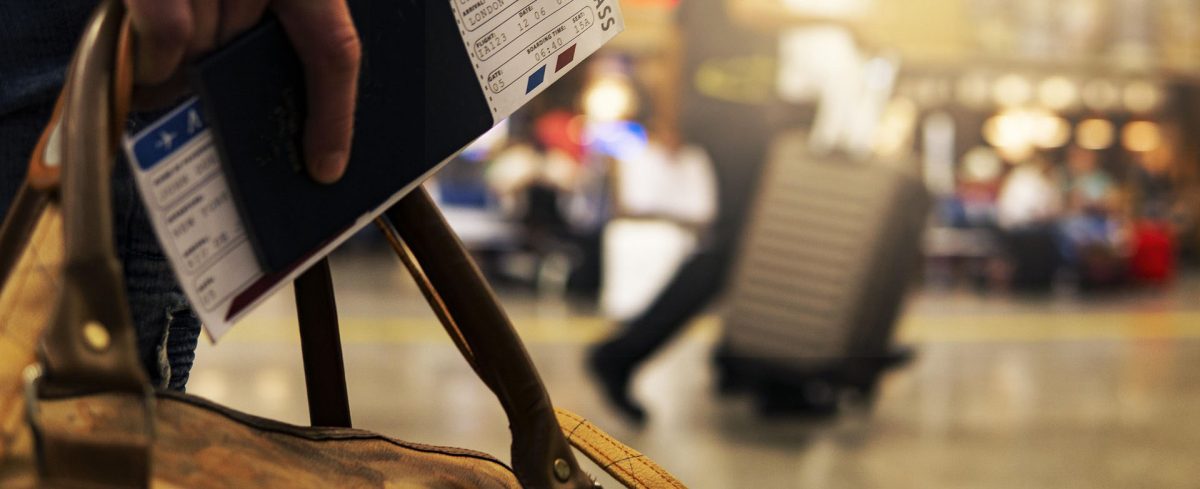
How does it feel to move to a completely new country – alone, without family nearby, without a safety net? For me, it felt equal parts terrifying and exciting. I am Vi, I am from Vietnam, and in December 2025 I graduated from SAMK with a degree in Data Engineering. I did not arrive here with a dream or a clear passion for coding. My plan, if you can call it that, was simply: try my best and see how far I get.
I came straight from high school. No coding experience, no relatives in Finland, and an English that worked well enough on paper but wobbled the moment a real conversation started. On top of the language and the weather, I carried my own set of assumptions about learning – assumptions I had never thought to question before. In my mind, if I struggled with something, it was the teacher’s job to fix it. My learning was not really my responsibility. It was theirs. I had never examined that belief; it had just always been there.
That belief met its match early in the first semester, in a lab session with Toni Aaltonen – a teacher whose courses challenged me the most: Python programming, machine learning, ROS, advanced AI methods. I was stuck on an exercise and, gathering all my courage, raised my hand. Toni came over, listened to my question, smiled gently, and said: ”It’s in the material.” Then he walked away. I was furious. Inside my head I was screaming: ”I read the material! There is no answer! You are the teacher – give me the answer!” But I stayed quiet, took a breath, and read the material again. Well… he was right. It was there. I had just not read carefully enough.
A similar thing happened again later. I asked Toni a question with no context – no explanation of what I had already tried, no description of what had gone wrong. He could not help me, because without context, there was no way to know which of a dozen possible problems I was facing. Slowly, across many small moments like these, something shifted. I started researching before asking. I started forming proper questions: here is what I tried, here is why it did not work, here is what I think might be the reason. I realised the research I did before asking was often where the real learning happened. My curiosity, which had always been there but never acted on, finally had somewhere to go.
By the end of my second year, I had studied programming languages, databases, machine learning, and more. My grades were good – I was working hard to keep a scholarship. But something felt hollow. I had a collection of theories and no project where they all came together. Then a lucky coincidence: RoboAI Academy – a programme where students from different fields like data engineering, mechatronics, electrical and mechanical engineering, from both Finnish and English programmes, collaborate on real cases brought by companies – was opening its doors to English-speaking students for the first time. It was a different kind of learning: instead of practical exercises that each covered one piece of the puzzle, we were handed a real problem and had to assemble the whole picture ourselves. Worth mentioning – the curriculum has since grown too, and there are now courses that let you apply your knowledge through projects even outside RoboAI. The path to hands-on learning is more open than it was when I started.
After my third year, I applied for a summer trainee at Kongsberg Maritime Finland Oy. Toni Aaltonen – the same one who once smiled and told me to read the material – recommended me for the position. I have thought about that moment many times since. It was a quiet confirmation that the shift had been real and visible. At the internship, my supervisor proposed a thesis topic: a locally hosted RAG chatbot to act as a firm’s living memory for service reports. Engineers could ask it questions about past maintenance work and get answers drawn from the company’s own documents – no cloud, no data leaving the building. I built a working prototype. It was not production-ready, but the company gave me good feedback, and the thesis received a grade of 5. It has since been recognised in SAMK’s Technology and Maritime Studies award series – something I still find a little surreal.
No dream, no grand plan – just a one-way ticket and a willingness to try. As it turns out, that was a pretty good place to start. Own your curiosity. Act on it – even halfway counts. What you learn along the way is never wasted.
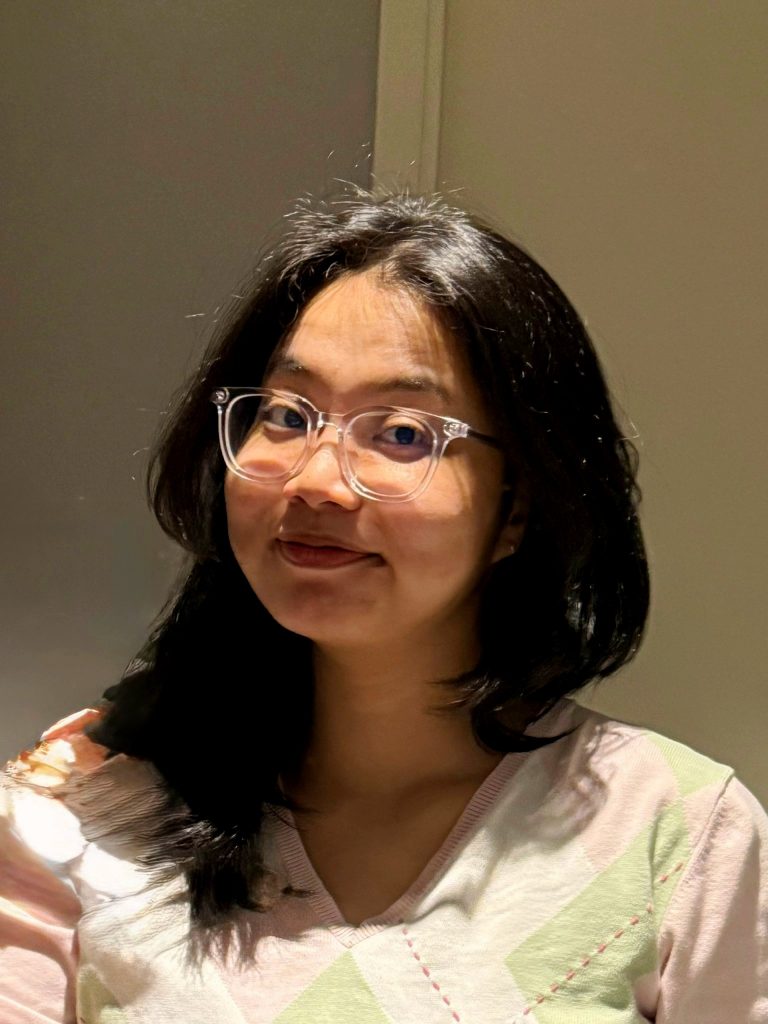
Vi Lê Trần is a Data Engineering graduate (December 2025) from SAMK, originally from Vietnam. She now works as a development engineer at Kongsberg Maritime Finland Oy.
Her bachelor’s thesis on a locally hosted RAG chatbot for service report memory – developed during her internship – won the award for best thesis in the Technology and Maritime Studies series.
Explore the thesis in Theseus.
Article photo: Pixabay/joshuaworoniecki